PC gamers have learned to read graphics card launches with a raised eyebrow, especially when a third player promises to shake up a two-brand habit. The Intel Arc GPU story now sits in a strange but useful place: no longer a punchline, not yet a threat to Nvidia, and most interesting where buyers feel squeezed hardest. For people tracking market shifts in consumer tech through independent tech coverage, the story is not “Can Intel beat Nvidia tomorrow?” That is the wrong question. The better one is whether Intel can make budget graphics cards feel less like leftovers. In the USA, that matters because a lot of buyers are not building showcase rigs. They are trying to stretch a tax refund, revive an older desktop, or build a first PC for a teenager who plays Fortnite, Minecraft, Valorant, and maybe Cyberpunk when settings are sensible. Intel’s place is still small, but small can be useful when the market above it gets too expensive. The honest answer comes fast: Intel has not caught Nvidia, but it has finally found a lane worth watching.
Where Intel Arc GPU Fits in the Post-Hype Graphics Market
Intel entered desktop graphics with the weight of a famous name and the awkwardness of a newcomer. That mix created expectations no first-generation card could meet. Nvidia had years of driver habits, creator app support, game profiles, store placement, and brand comfort. AMD had the “second choice with real history” role. Intel had to prove that its card would not turn a normal game night into a troubleshooting session. That is a harder job than making silicon. A graphics card sits inside a messy life full of old games, new patches, Windows updates, budget power supplies, and random launchers. Intel’s problem was never only performance. It was whether people believed the performance would still be there next week.
Why Intel Is No Longer Only a Curiosity
The first Arc generation taught buyers to be careful. Some games ran well. Others acted like they had never heard of the hardware. Older DirectX titles were the sore spot, and that hurt because PC gaming is not only new releases. Someone in Ohio may be playing a 2024 shooter on Friday, then going back to Team Fortress 2 or an older strategy game on Sunday. A card that stumbles there feels unfinished, even if it does fine in a new benchmark suite.
That is where Intel’s later position changed. The company did not win trust through one magic card. It won some patience by pushing driver updates, fixing rough spots, and making the second wave feel less experimental. Arc B580 and B570 arrived with a clearer job: sell value, chase 1080p and 1440p buyers, and stop pretending the high-end crown was within reach. That cleaner target helped reviewers judge the cards against the right rivals instead of against a fantasy version of Intel.
The counterintuitive part is that being less ambitious made the line more believable. A card that says, “I am a fair deal for normal settings,” has a cleaner pitch than one trying to act like a flagship killer. Intel’s market position improved once the message got smaller. That may sound like retreat, but it is closer to discipline. The low and middle shelves are where a third GPU brand can be tested without asking buyers to risk a whole paycheck.
The Nvidia Gap Is Bigger Than Frame Rates
Nvidia’s lead is not built only on speed. It is built on habit. A buyer walks into Micro Center, sees GeForce boxes, remembers a friend saying “get Nvidia,” and feels safe. That is a hard wall to climb. Even when Arc performs well for the money, the buyer still asks the quiet question: what breaks? That question can beat a chart.
This is the hidden tax Intel pays in the Nvidia GPU competition. It must beat expectations, not only benchmark charts. If an Nvidia card is a little slower in one title but feels safer, many buyers still choose it. That is not ignorance. It is risk control. People do not want to become unpaid driver testers after spending money.
A good example is the parent building a $700 gaming PC for a kid. The parent may not care about ray tracing theory or encoder charts. They want the machine to work after school without support calls. Intel has to sell that parent confidence before it sells frames. Until that happens at scale, Arc will be judged with a stricter eye than GeForce, even when the price is tempting.
Why Budget Graphics Cards Became Intel’s Best Opening
The budget end of the market has become oddly neglected. High-end GPUs get the stage lights, but most people do not shop there. A $600 card is not a casual purchase in many American homes. A $250 card, though, sits in the zone where a gamer can save for a month, sell an older part, or choose a GPU instead of a console upgrade. This is where Intel found oxygen. It did not need to convince the 4K ultra crowd first. It needed to reach the buyer who wants a sharp upgrade from integrated graphics or an aging GTX card without blowing up the whole build budget.
Nvidia Left Room Below the Hype
Nvidia’s strongest products often live where margins are richer. That makes business sense, but it leaves tension at the lower end. The GeForce brand still carries weight, yet entry-level buyers have noticed memory limits, pricing jumps, and cards that feel built to protect the lineup above them. That gives budget graphics cards a rare opening. When the trusted brand feels stingy, shoppers start listening to the outsider.
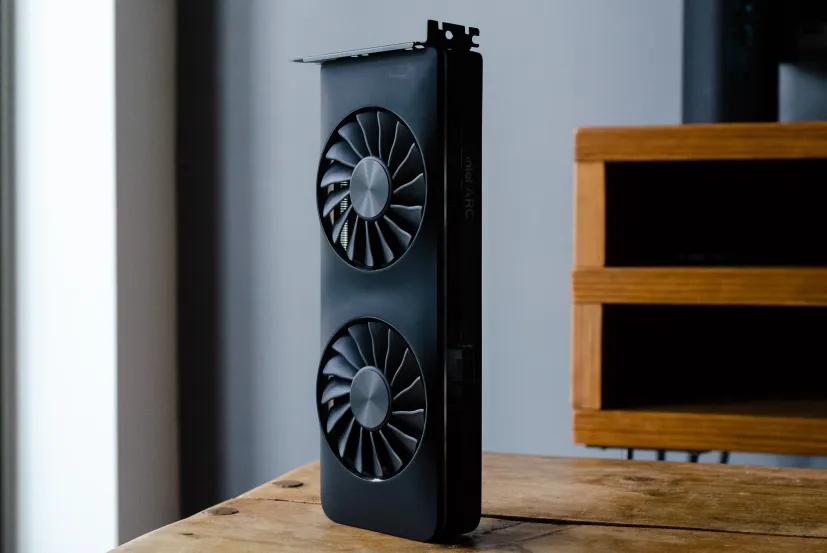
Intel saw that opening with the B580. The value story was easy to understand: enough memory, fair pricing, better 1440p ambition than many expected, and current features without a luxury bill. The card did not need to beat every rival in every game. It needed to make a buyer pause before clicking “add to cart” on the usual option. That pause is how a small brand becomes part of the conversation.
In retail, a pause is progress. If a shopper in Dallas compares an Arc card with an RTX 4060 and asks whether the cheaper or roomier option makes more sense, Intel has already moved from invisible to relevant. That is a big step for a brand still earning trust in graphics. It also gives reviewers a cleaner recommendation: not “buy this because Intel is back,” but “consider this because the price class is thin.”
Memory Became a Better Selling Point Than Raw Speed
For years, budget cards were sold through average frame rates. That still matters, but memory has become the argument ordinary buyers can feel. Newer games ask more from textures, open worlds, and background systems. A card may run fine today, then age poorly when memory limits show up as stutter. Nobody enjoys lowering textures on a new purchase after six months.
Intel’s clever move was giving value buyers a spec they could understand. More video memory at a fair price sounds plain, but plain sells when people feel burned by thin entry-level cards. It also gives store clerks and YouTube reviewers a simple way to explain the product. You do not need a lecture on architecture to understand why extra headroom can help a card age with more grace.
The non-obvious insight is that Intel does not have to win the fastest-card debate to win a few carts. It can win the “least annoying compromise” debate. That is where budget graphics cards are judged in real homes, not on launch slides. A buyer choosing parts for a first gaming PC build may accept lower ray tracing strength if the card gives smoother texture settings at a price that leaves room for a better SSD. PC building is full of tradeoffs. Intel finally found one that sounds sane.
Driver Trust, Game Support, and the Nvidia GPU Competition Problem
Price can open the door, but drivers decide whether buyers come back. This is where Intel’s graphics story gets serious. A GPU is not a toaster. It changes every month as games, Windows builds, engines, anti-cheat tools, and driver packages change around it. A card can be a bargain on Tuesday and a headache on Friday if support lags. That is why Intel’s long-term place will be earned more through boring updates than dramatic launch claims. The company needs fewer viral fixes and more quiet weeks where nothing strange happens.
Why “It Works” Beats a Pretty Benchmark
Arc’s early reputation was shaped by uneven support. Some of that was fair. Some of it became exaggerated by online memory, which never forgets a bad launch. Either way, Intel has had to live with the result. Every new Arc release carries the baggage of the first one. A clean benchmark chart cannot erase a friend’s old warning in a Discord chat.
The company’s driver work has narrowed the trust gap, especially for buyers who mainly play newer titles. Day-one support claims, better software, and fixes for older APIs help. Still, Nvidia’s long driver history gives it a comfort layer Intel cannot buy overnight. You have to earn that one patch at a time. You also have to avoid breaking something people thought was solved.
A useful American example is the college gamer with a small dorm desk and a tight budget. They may run Steam, Discord, OBS, a browser, and three half-finished games in the same week. They do not want to know which rendering API a game uses. They want the card to disappear into the routine. That is the standard Intel must hit before buyers stop treating Arc as a special case.
Creator Features Give Arc a Second Door Into the PC
Gaming is the headline, but content work gives Intel another angle. Arc’s media engine and AV1 support matter for streamers, video editors, and small creators who do not own studio hardware. A budget gaming card that also helps encode clean video can make sense for a YouTuber editing shorts after work. That creator may care less about esports frame rates and more about clean exports, smooth recording, and fewer dropped frames.
This is where the Nvidia GPU competition gets more layered. Nvidia still has a deep advantage in creator apps, CUDA workflows, and mindshare. Yet not every creator is training models or rendering heavy 3D scenes. Many are cutting 1080p or 4K footage, recording gameplay, making thumbnails, and posting to TikTok or YouTube. For them, a cheaper card with good media support can feel like found money.
Intel’s chance is in that middle lane. The company can serve the buyer who games at night and edits clips on Saturday. That buyer may not care who owns the premium workstation market. They care whether export times are decent and the final video looks clean. The catch is software confidence. If a creator depends on a tool for paid work, “probably fine” is not enough. Intel needs more repeat stories from normal users, not only review labs. Trust spreads through boring success.
The Real Buyer Math Behind Discrete GPU Market Share
Market share can make Intel look almost irrelevant, and in one sense that is fair. Nvidia sells the overwhelming majority of add-in-board graphics cards. AMD fights for the remaining visible space. Intel’s slice is small enough that a single percentage point can sound like a celebration and an insult at the same time. But numbers alone can flatten the story. A company entering a mature graphics market is not graded the same way as one defending the throne. The first win is not dominance. It is proof that the product deserves to keep existing.
Why One Percent Can Still Matter
Discrete GPU market share is a blunt tool. It tells you who ships cards, but not always who has momentum in a neglected price band. A small share can hide a useful foothold if the product is finally showing up in real buying conversations. Intel does not need to own the market next year. It needs to survive long enough to become a normal third option. That requires patience from Intel and a clear reason for buyers to care.
The Steam Hardware & Software Survey is helpful here because it shows what gamers are actually using, though it is not a clean sales ledger. Cards appear there slowly. Some systems never report. Laptop chips and desktop cards can blur the picture. Still, when a product begins showing up in user data and retail chatter, it means the story has escaped the press release.
That is why Intel’s small footprint should not be read as failure by itself. The failure would be no repeat buyers, no driver progress, no board partners, and no clear reason to exist. Arc has problems, but it now has a reason to exist: pressure the low and middle shelves. In a market where Nvidia can set the tone almost by default, even mild pressure has value for shoppers.
Retail Shelf Space Is the Real Fight
The next battle is not only technical. It is physical and psychological. Can a buyer see the card in stock? Can they find a model from a brand they trust? Can a sales associate explain it in one minute? Can a YouTube reviewer recommend it without adding five warnings? The shelf is where confidence becomes money.
That last part matters more than Intel may like. A product can benchmark well and still lose if every recommendation sounds nervous. “Good card, but check your games first” is honest advice, yet it slows sales. Nvidia rarely faces that burden in the same price class. That does not mean Intel is doomed. It means the company has to make caution less necessary with each driver cycle.
Discrete GPU market share will move only when Intel reduces that caution. Better drivers help. Stable pricing helps. Board partners help. So does staying in the market long enough that buyers stop asking whether Intel will quit. A shopper reading a graphics card upgrade guide should not need a separate courage test to pick Arc. The choice has to feel ordinary. That is the finish line Intel is chasing, and it is harder than winning one benchmark run.
Conclusion
Intel’s graphics position is no longer easy to laugh off, but it is also not close to a takeover. That middle truth is the most honest read. Nvidia remains the default for many good reasons: trust, speed, software history, and years of buyer comfort. Intel has found a narrower path by making value feel interesting again. The Intel Arc GPU market position now depends on whether the company can keep showing up in the budget lane without losing patience, partners, or driver focus. The next few years will not be decided by one launch. They will be decided by repeat purchases, fewer caveats, and more ordinary gamers saying their card works fine. That sounds modest. It is not. In a market where one brand feels automatic, becoming a normal option is a serious achievement. For American PC buyers, the best outcome is not Intel beating Nvidia tomorrow. It is Nvidia having to care more about the $250 shopper.
Frequently Asked Questions
Is Intel Arc worth buying for budget gaming in the USA?
Yes, for the right buyer. Arc makes the most sense when pricing is fair, the games you play are known to run well, and you want stronger value than some entry-level rivals offer. It is less ideal for users who need the safest plug-and-play choice.
How does Arc compare with Nvidia for everyday PC gaming?
Nvidia remains the safer pick across more games, drivers, and support tools. Arc can be a better deal in certain price bands, especially when memory and cost matter. The smart move is checking performance in your own favorite games before buying.
Why is Nvidia still ahead if Intel cards improved?
Brand trust, driver history, retail presence, and software support all stack in Nvidia’s favor. Better Intel hardware helps, but buyers also want confidence. Nvidia has earned that comfort over many years, while Intel is still repairing early doubts.
Are Arc cards good for older games?
They are better than they were at launch, but older games remain the area where buyers should do more homework. DirectX 9 and DirectX 11 titles can be less predictable than newer games. Check recent user reports for the exact titles you play.
What makes Arc B580 interesting for gamers?
Its appeal comes from value. It gives budget shoppers a serious option with enough memory and performance for sensible 1080p and 1440p settings. It is not built for bragging rights. It is built for people who want the most card for the money.
Does discrete GPU market share mean Intel failed?
No. A small share means Intel is still a minor player, not that the product has no purpose. The better test is whether buyers return, drivers improve, partners keep making cards, and the line earns a stable place on store shelves.
Should creators consider Arc for video work?
Some should. Arc can make sense for streamers and editors who value current media features and fair pricing. People using paid workflows should check their exact editing apps first, because Nvidia still has broader support in many creator tools.
What would make Intel a stronger GPU competitor?
Better driver consistency, steady inventory, clear pricing, stronger board partner support, and fewer buyer warnings would help most. Intel does not need a flagship win first. It needs normal shoppers to see Arc as a safe budget choice.

Related Posts

AI Video Generation Technology Progress From Sora to Current Competitors

Wearable Health Tech Accuracy Issues That Medical Professionals Warn About