
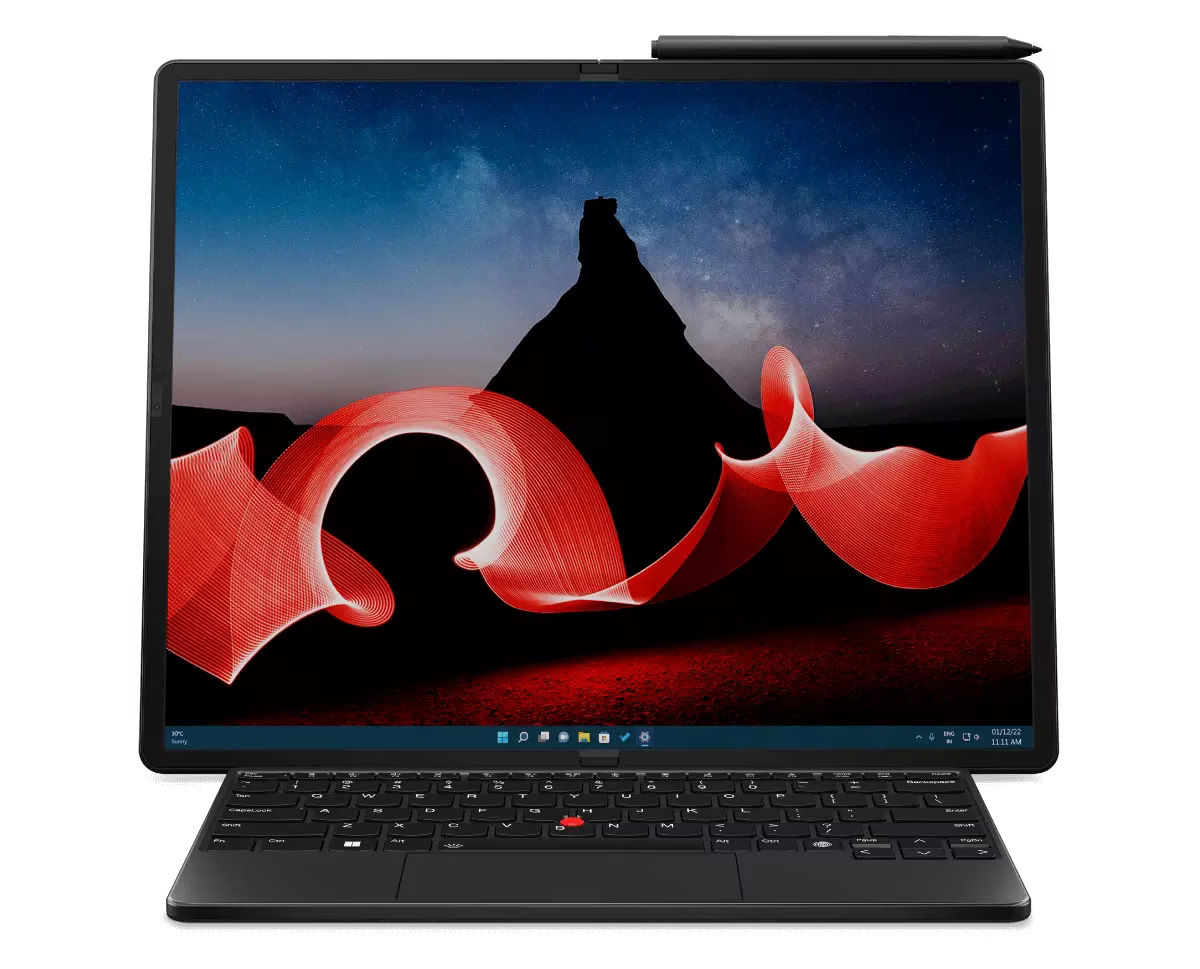
The normal laptop has had a long, safe run: screen on top, keyboard below, hinge in the middle. Foldable laptop designs are trying to break that pattern without making daily work feel like a stunt. For U.S. buyers watching Lenovo, Asus, HP, and other PC makers, the real question is not whether the screen can bend. It is whether the whole machine helps you work better in an airport lounge, a small apartment, a client meeting, or a home office that has to disappear by dinner. That is why this category deserves more than hype. A foldable OLED laptop can act like a tablet, a compact notebook, and a desk screen, but only when the keyboard, software, stand, battery, and hinge all behave. For readers who follow U.S. tech coverage, the next few years will show whether these machines become practical tools or stay pricey experiments for early buyers.
Why Foldable Laptop Designs Are Moving Beyond the Demo Table
The first wave of folding-screen PCs felt like trade-show magic. Open the panel, fold it halfway, snap on a keyboard, and people stop walking. That attention still matters, but it is not enough. A buyer in Chicago or Phoenix does not spend laptop money to impress strangers at Starbucks. The machine has to answer a plain need: more usable screen in less bag space.
Lenovo Made the Hinge Feel Like the Product
Lenovo deserves credit for treating the hinge as more than a mechanical part. The ThinkPad X1 Fold line pushed the idea that the computer’s spine could shape the whole workflow. Lenovo’s 16-inch ThinkPad X1 Fold lists a 16.3-inch folding OLED screen with 2560 x 2024 resolution, which becomes a 12-inch form when folded. That size shift matters because it gives you a large reading or layout surface without forcing you to carry a normal 16-inch laptop frame.
The interesting part is not the spec by itself. It is the posture. You can sit with the screen open like a small monitor and keep the keyboard separate. You can fold it into a compact laptop when the table is narrow. You can hold it like a large tablet when reading contracts, reports, or long briefs. That makes the device feel less like a laptop replacement and more like a workspace that changes shape.
Still, Lenovo’s approach also shows the hard truth. A folding PC has to be judged as a full kit. The screen may be the headline, but the keyboard, stand, pen, ports, webcam angle, and carry weight decide whether it earns a place in your bag. A weak accessory can make an expensive device feel unfinished.
Asus Turned the Display Into the Main Reason to Care
Asus took a more visual route with the Zenbook 17 Fold OLED. Its 17.3-inch 2.5K folding OLED screen can work as one large 4:3 display or fold into two 12.5-inch screen areas. Asus also built the device around several modes, including laptop, desktop, tablet, reader, and extended setups.
That pitch makes sense for people who hate carrying extra gear. A consultant flying from Dallas to New York can use a compact folded PC on the plane, then open it on a hotel desk for a larger workspace. A design student can sketch on the screen, watch a class recording, and type notes with a separate keyboard. A small-business owner can use one machine for invoices, video calls, and product photos.
The counterintuitive part is that the larger screen is not always the biggest win. Sometimes the best feature is the smaller packed shape. A 17-inch laptop usually feels like a commitment. A folding 17-inch screen that travels closer to a compact notebook changes the math. You are not buying a larger laptop. You are buying a larger moment when the table allows it.
The Hardware Battle Is About Trust, Not Showmanship
A folding PC asks for more trust than a normal laptop. With a clamshell, buyers already know what can go wrong: worn keys, weak battery, cracked screen, loose hinge. With a folding screen, the worry is more emotional. People wonder if the crease will age badly, if the panel will mark, if the keyboard will slide, or if the hinge will feel tired after two years.
The Crease Matters Less Than the Work Angle
Most people notice the crease first because it is easy to see under store lighting. That makes sense, but it can become the wrong concern. On a foldable OLED laptop, the bigger issue is how the display sits when you are typing, reading, or presenting. A mild crease may fade from attention once you start working. A bad angle never does.
This is where stand design becomes serious. HP’s Spectre Foldable PC leaned hard into a three-in-one idea, with laptop, tablet, and desktop-style use built around a folding 17-inch screen. HP positioned it for hybrid life, not only for gadget fans. That is a smart frame because the device lives or dies by daily scenes. Kitchen table at 7 a.m. Office desk at noon. Couch review session at night.
A normal laptop hides many design sins because the shape is fixed. A folding machine has no such mercy. When you open it wide, the stand must feel calm. When you use it half-folded, the software must understand the screen zones. When you remove the keyboard, touch targets must be easy to hit. This is why the official Intel Evo laptop platform angle matters in this class: fast wake, steady response, and strong device behavior count more when the form keeps changing.
The Keyboard Is the Part Buyers Should Test First
The screen sells the dream, but the keyboard decides the workday. A detachable keyboard laptop can feel smart when the keyboard snaps into place, charges without fuss, and gives your wrists a familiar layout. It can also feel annoying if it needs separate charging, shifts on the glass, or turns a quick email into a small setup ritual.
This is the part U.S. buyers should test in person when possible. Open a draft. Write a few lines. Move the cursor. Switch from lap use to desk use. Try it on a small café table. A device can look clean in photos and still feel awkward when your coffee, phone, and notebook are sharing the same square foot of space.
There is also a repair concern hiding here. A standard laptop keyboard is part of the base. A folding PC often depends on accessories that can be lost, worn, or replaced at added cost. That does not make the category weak. It means the best detachable keyboard laptop will be the one that makes the accessory feel boring in the best way. It should fade into the job.
Where These Machines Fit in American Daily Work
The right buyer for this category is not always the person with the highest budget. It is the person whose work changes setting during the day. A folding PC makes less sense for someone who sits at one desk with two monitors. It makes more sense for people who move between rooms, cities, and client spaces, yet still want a screen larger than a tablet.
The Best Fit Is the Worker Who Keeps Rebuilding a Desk
A hybrid work laptop has to handle strange places. A spare bedroom. A coworking booth. A hotel desk with one weak lamp. A dining table cleared between school pickup and dinner. Folding PCs speak to that mess because they can become a larger screen without asking you to pack a monitor.
Think about a real estate agent in Florida. In the car, the device can stay folded for forms and messages. At a showing, it can open into a broad display for floor plans. Back home, the keyboard can sit in front while the screen stands like a small desktop. One machine covers moments that used to need a tablet plus laptop plus portable monitor.
The non-obvious advantage is privacy of setup. Carrying a separate portable monitor, cable, stand, and laptop can make temporary work feel messy. A foldable PC looks cleaner. That matters in client-facing roles. The room does not need to know you built your office in four parts.
The Wrong Buyer Will Feel the Cost Fast
These machines are not the safest choice for every student, gamer, accountant, or office worker. A traditional laptop still wins on price, port selection, keyboard feel, repair options, and simple durability. That is not a failure. It is the category showing its borders.
A foldable OLED laptop can be wonderful for reading long documents, viewing layouts, and spreading apps across one tall surface. It is less convincing for heavy gaming, long data-entry sessions on your lap, or work that needs many wired accessories. If your job is eight hours of spreadsheets at the same desk, you may be happier with a strong 14-inch laptop and a separate monitor.
This is where buyers should be honest. Wanting the future is not the same as needing it. Before paying for a folding screen, compare it with best laptops for remote work and an OLED screen buying guide. You may find that a normal machine gives you 90 percent of the value for far less money. Or you may see that the folding screen solves a problem you face every week.
What Lenovo Asus HP and Others Still Need to Fix
The next stage will not be won by the company with the wildest demo. It will be won by the company that makes folding feel normal. That means lower prices, better accessory storage, stronger software behavior, calmer hinges, and retail staff who can explain the use case in one minute. Nobody wants to feel like they need a training session to open a laptop.
Software Has to Respect the Shape Change
Windows touch support has improved, and Microsoft explains that Windows 11 supports touch gestures, pens, and finger input across touch devices. That helps, but foldable PCs need more than touch. They need smart layout memory. If you open a note app on the lower half and a video call on the upper half, the machine should remember that pattern.
The gap between “works” and “feels natural” is wide. A folding screen can act like one large canvas, two stacked screens, a book, a tablet, or a mini desktop. Each mode changes what the user expects from app windows, typing, brightness, rotation, camera angle, and touch targets. Software that treats every posture the same will make the hardware feel less thoughtful than it is.
This is also where manufacturers should stop chasing too many modes in marketing. Six modes sound fun on a product page. Three excellent modes are better in real life. Laptop mode, desktop mode, and reading or tablet mode may be enough for most buyers. Fewer promises can lead to better habits.
Price Must Come Down Before the Category Spreads
Early folding PCs are expensive because the parts are expensive and the engineering is hard. Flexible OLED panels, custom hinges, light frames, strong stands, and matched keyboards all add cost. HP, Lenovo, and Asus have each shown that premium buyers will at least look. The harder task is convincing everyday U.S. buyers who can already find strong laptops below $1,500.
A detachable keyboard laptop in this class also has to survive retail comparison. On one side of the aisle, a buyer sees a proven MacBook, ThinkPad, Dell XPS, or Surface. On the other, a folding PC costs more and asks for new habits. That is a tough sale unless the benefit is obvious in the first five minutes.
The promising sign is that folding-screen thinking is already affecting other designs. Rollable screens, dual-screen laptops, better detachable keyboards, and lighter portable monitors all come from the same pressure: people want more display area without carrying more bulk. Even if folding PCs stay niche, their ideas may improve the laptop you buy next.
Conclusion
The folding PC is not a toy anymore, but it is not yet the default answer either. Lenovo, Asus, HP, and others have proved that a bendable OLED screen can support serious work when the rest of the machine keeps up. The next test is less glamorous. It is about typing comfort, repair confidence, app behavior, price, and whether the device still feels smart after the first month.
That is the sober promise of foldable laptop designs: not a flashy replacement for every notebook, but a better fit for people whose work refuses to stay in one place. The best buyer is someone who needs a large screen sometimes, a compact bag often, and a work setup that can change without drama.
For everyone else, patience may pay. This category is still learning how normal people work. Watch the next wave closely, test the keyboard before the screen wins you over, and buy only when the shape solves a problem you already have.
Frequently Asked Questions
Are foldable laptops worth buying in the USA right now?
They are worth considering if you travel often, work in mixed spaces, or need a larger screen without carrying a monitor. A normal laptop is still better for buyers who care most about price, repair ease, gaming, or long typing sessions on their lap.
What is the main benefit of a foldable OLED laptop?
The main benefit is screen size that packs down smaller than a normal large laptop. You can read, present, sketch, or spread out apps on a broad OLED panel, then fold the device into a more compact shape for travel.
Is Lenovo ahead of Asus in folding-screen laptops?
Lenovo has stronger early category history because the ThinkPad X1 Fold helped define the folding PC idea. Asus made a strong case with a larger 17.3-inch Zenbook Fold screen. The better choice depends on keyboard feel, screen size, software behavior, and price.
Can a foldable laptop replace a desktop monitor?
It can replace a portable monitor for many travelers, but it will not beat a full desktop monitor setup for all-day desk work. The screen is useful for temporary workstations, hotel rooms, client visits, and small apartments where space is limited.
Do foldable laptops have durability problems?
They are more complex than standard laptops, so hinge care and screen protection matter more. The safest move is to check warranty terms, avoid pressure on the folded screen, keep dust away from the hinge area, and use the included case or sleeve.
Is a detachable keyboard laptop good for daily typing?
It can be good when the keyboard has a stable base, strong key feel, and easy charging. It can become frustrating if it shifts, feels cramped, or adds setup time. Buyers should type on it before choosing one for daily work.
Who should avoid foldable laptops?
Heavy gamers, budget buyers, repair-focused users, and people who work at one fixed desk may be better served by a standard laptop. If you rarely need a larger mobile screen, the folding feature may feel expensive after the first week.
Will foldable laptops become cheaper soon?
Prices should drop as flexible OLED panels, hinges, and accessories mature, but the category will likely remain premium for a while. The fastest improvements may come through better keyboards, lighter bodies, stronger stands, and software that handles screen changes with less friction.

Related Posts

AI Video Generation Technology Progress From Sora to Current Competitors
Wearable Health Tech Accuracy Issues That Medical Professionals Warn About