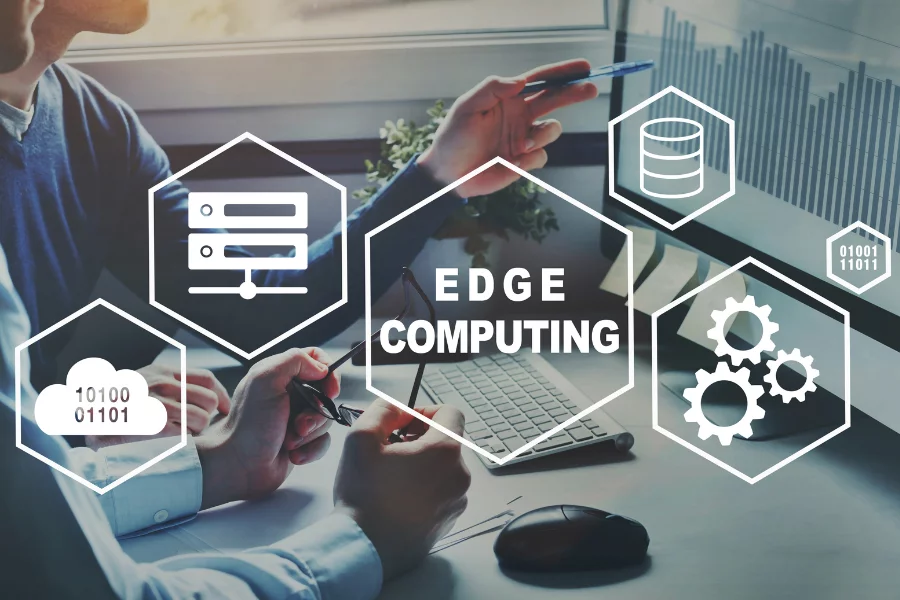
The rapid growth of smart technology has changed how people interact with their homes, workplaces, and cities. From smart speakers and security cameras to wearable fitness trackers and connected vehicles, modern devices are becoming more intelligent every year. One of the biggest reasons behind this transformation is edge computing. Instead of sending every piece of data to distant cloud servers, edge computing processes information closer to where it is generated. This approach delivers faster responses, better privacy, and greater efficiency, making smart devices more reliable in everyday life. As more connected products enter the market, edge computing is expected to play an even greater role in shaping the future of digital experiences.
Faster Decision Making with Local Processing
Traditional cloud computing relies on transmitting data to centralized servers before returning results to users. Although effective, this process can introduce delays, especially for applications that require instant decisions. Edge computing solves this challenge by allowing devices or nearby edge servers to analyze data locally. Smart security cameras, voice assistants, and industrial sensors can respond almost immediately because they do not need to wait for distant servers. This reduced latency improves user experience and makes connected devices more dependable.
Smarter Homes and Energy Management
Smart homes are becoming increasingly sophisticated as edge computing enhances automation systems. Connected lighting, thermostats, and home security devices can analyze user behavior locally to make real time adjustments. This reduces internet dependency while improving energy efficiency and security. As households explore renewable energy initiatives like pm surya ghar scheme, edge enabled smart energy systems can optimize electricity usage, monitor solar production, and improve battery management through instant local processing instead of relying solely on cloud services.
Improved Privacy and Security
Privacy remains a major concern for users of connected devices. Smart cameras, wearable devices, and voice assistants collect significant amounts of personal information every day. Edge computing addresses this issue by processing much of the data directly on the device or within a nearby network. Since only essential information is transmitted to cloud servers, sensitive personal data remains more secure. This approach reduces exposure to cyber threats while giving users greater confidence in adopting smart technologies.
Supporting Education and Digital Platforms
Digital education initiatives increasingly depend on reliable smart devices. Students use tablets, laptops, and mobile applications for learning, assessments, and collaboration. Platforms such as https://www.digishakti.info demonstrate how digital ecosystems continue expanding through connected technologies. Edge computing improves these experiences by reducing delays in content delivery, enabling faster application performance, and supporting offline functionality where internet connectivity may be limited. These improvements help educational tools become more responsive and accessible for learners.
Enhancing Smart Cities and Connected Infrastructure
Cities worldwide are adopting intelligent transportation systems, smart traffic management, environmental monitoring, and public safety solutions. Edge computing enables these systems to process enormous volumes of sensor data without overwhelming cloud infrastructure. Traffic cameras can detect congestion instantly, environmental sensors can monitor air quality in real time, and emergency response systems can react more quickly during critical situations. Processing data closer to its source reduces network congestion while improving the speed and accuracy of decision making.
Better Performance for Consumer Applications Including punjab state lottery 2025
Everyday mobile applications benefit significantly from edge computing. Whether users are streaming videos, participating in online gaming, using navigation services, or accessing information related to punjab state lottery 2025, local processing helps reduce loading times and improve responsiveness. Faster content delivery enhances the overall user experience while reducing bandwidth consumption. As applications continue incorporating artificial intelligence, edge computing will allow many intelligent features to operate directly on personal devices.
Revolutionizing Agriculture and Land Management Through mee bhoomi portal
Governments and organizations increasingly use digital platforms to improve land management and public services. Systems such as mee bhoomi portal demonstrate how digital records can simplify access to land information. Edge computing can further enhance these services by enabling field devices, drones, and mobile applications to process mapping and survey data locally. Farmers, surveyors, and officials benefit from quicker access to information, even in areas with limited internet connectivity.
The Future of Everyday Smart Devices
The future of smart devices depends on their ability to deliver faster, safer, and more reliable experiences. Edge computing provides the technological foundation needed to support artificial intelligence, machine learning, autonomous vehicles, healthcare monitoring, industrial automation, and next generation consumer electronics. By moving data processing closer to where information is generated, edge computing reduces latency, saves bandwidth, strengthens privacy, and increases operational efficiency. As connected ecosystems continue expanding, this technology will become an essential component of everyday digital life, transforming how people interact with smart devices while creating more intelligent and responsive environments.
